Blog

  • That wall

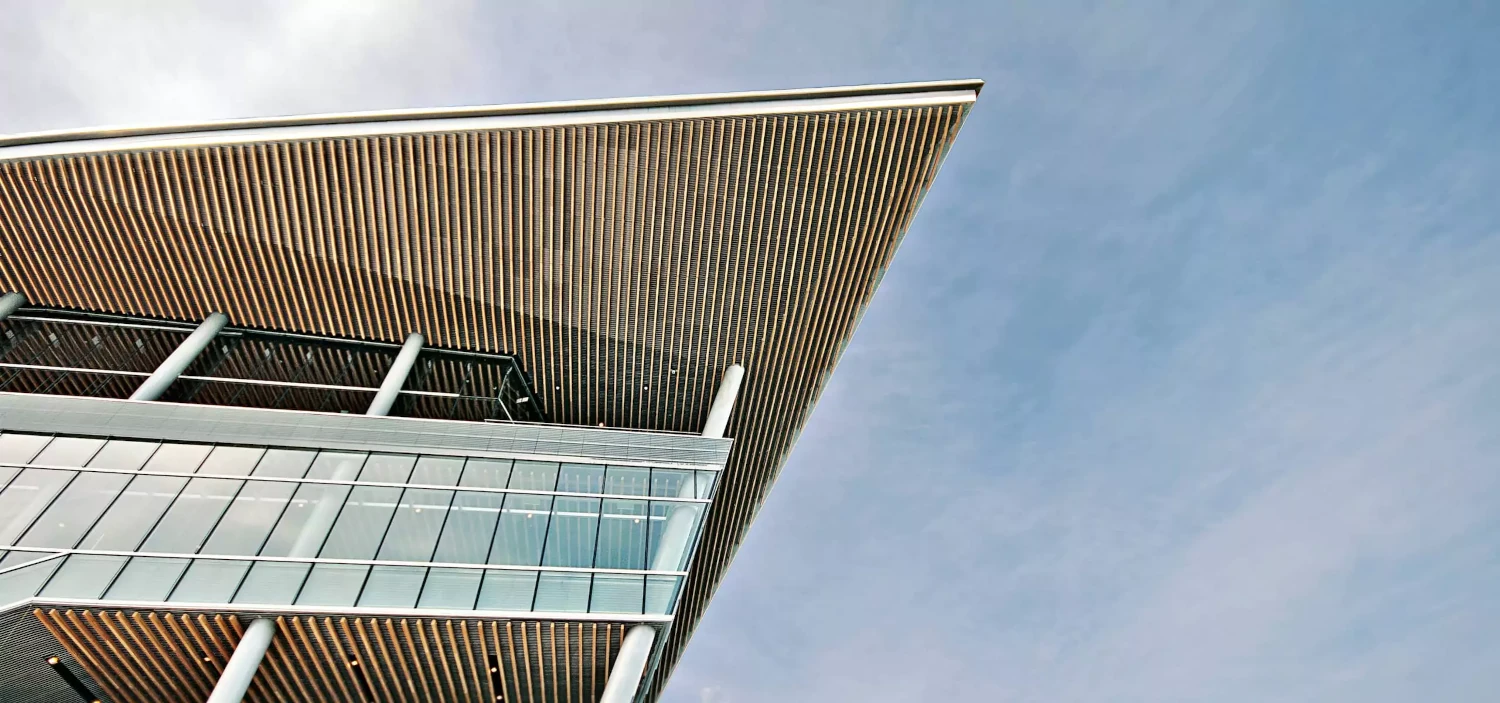
    brown and white striped lighthouse
    Photo by carmela dinardo on Pexels.com


    I'll walk that wall.
    Leave behind,
    Every dream that was trashed.

    Plunge into the sea,
    Proud and abide.
    Linked to my own colour of time.
    Everything I wanted untrue by design.

    No matter the scars,
    I'll look down upon.
    Upon that long entrance,
    Where darkness gulps you entire.
    I'll walk that wall.
    That's all I call.
  • La gran pregunta de todo cuenta cuentos

    closed book beside gray string light on white surface
    Photo by Olena Bohovyk on Pexels.com


    Contar relatos efectivos no es fácil. La dificultad no estriba en contarlos, sino en convencer a todos y cada uno para que se los crean. Gran parte de la historia gira alrededor de esta cuestión: ¿cómo convence uno a millones de personas para que crean determinadas historias sobre dioses, o naciones, o compañías de responsabilidad limitada?

    Sapiens. Yuval Noah Harari

    Y no es que los escritores vayamos tan lejos. Nos conformamos con 10,000 personas. Qué viene a ser mucho menos de los creyentes que tienen ciertos cuentos.

    Cómo Nintendo o… [ inserte el nombre de la religión rival porque la propia no es ningún cuento].

    ¿Cuál es la mayor historia de todos los tiempos?

    Disfruta tu tiempo pensando cómo convencer a tus lectores que tú mundo de ficción existe… Pasto kalo.

  • Why are comics and poems alike 6: are really metrics and comics compatible? p2

    person in black and gray long sleeve shirt
    Photo by cottonbro studio on Pexels.com

    Actually, I don’t think anyone has ever got themselves to pigeon cage comics regarding the number of vignettes on page the same way poems were for a long time for being iambic or not. I mean, I’m utterly ignorant as it is about poems in Spanish to consider getting myself into the foots existing for poems in English but just looking at poets¡ efforts to compose paired stanzas, triplets, redondillas, quintillas and a lot more of syllable number related names, makes me wonder if comic drawers would ever bother. A

    N INVISIBLE WORD EVERYBODY TALKS ABOUT

    And such a thing took me to a word no one bothers talking about. More like everybody mentions but no one defines. Except, maybe, the dictionary.

    beat /biːt/

    I. verb — [with obj. ]

    3. [no obj. ] — (of an instrument) make a rhythmical sound through being struck• drums were beating in the distance.

    II. noun1. a main accent or rhythmic unit in music or poetry• the glissando begins on the second beat.

    2. a strong rhythm in popular music• the music changed to a funky disco beat.

    3. [in sing. ] — a regular, rhythmic sound or movement• the beat of the wipers became almost hypnotic.

    4. the sound made when something, especially a musical instrument, is struck• he heard a regular drum beat.

    5. a pulsation of the heart.6. a periodic variation of sound or amplitude due to the combination of two sounds, electrical signals, or other vibrations having similar but not identical frequencies. Aha, at the time when I wrote this in Spanish, I relied on Goo.. to give me something to read and define what a beat was ̶ since every single manual about writing fiction I had started (and never finished) reading, spoke about but never really defined. Beats were the same kind of mystery arches were. Now I understand what an arch is but I’m still clueless how to define when to start or end one and why are they called arches? Funny enough, I’m still lost about beats. FILMOGRAPHY’S BEATS So I found this famous institution teaching things that had a definition for beats in filming. Here is the link in case you want to check it yourself.

    A BEAT IS THE STATEMENT TELLING WHAT’S GOING ON

    I know, the website doesn’t say that verbatim but defining things is a duty here. I think it is similar to: “Where two shopping carts are filled in to the brim, a white haired pipe smoker gets Dad on edge and Gretchen’s ideas about true love start to crumble»1.

    A beat is not centered in the how it happens but in the what and; seemingly, it is a way to subdivide a story de same way an outline divides into chapters and scenes. Very similar to a word Big-choma uses: a rundown. A something written where the drawer describes what they is going to draw.

    As such, beats explain how to subdivide things into scenes but nothing about measuring them. The measures regarding squares… I mean vignettes, haven’t been invented yet. In spite of the not entirely established convention [that perhaps exist only in my imagination] of 3 to 4 vignettes for some comics and 30 vignettes for webtoon.

    It can’t be counted as a convention since it is quite easy to add or take off any unnecessary vignette to adapt the flow to the beats of the story.

    The number of vignettes in the same manga volume, adapted to the number of beats or subdivisions giving shape to a story.

    In conclusion, poems and comics do share this separation or sibdivision of information in smaller units that can be measured and can alter the message conveyed.

    Though, metrics are not compatible to vignettes, Metrics deal with sound units and the vignettes are image units. Plus, there are no clear conventions about the number of vignettes or chomas used on page; like there used to be about poems.

    Would you thrive under the conditions of counting or the conditions of freedom? Have the best of times creating things with or without measure. Pasto kalo.

    1. Una historia familiar [A family’s story]. Christine Nöstlinger. Salvat Alfaguara. 1987. Traducción [translation from German to Spanish by] de Marisa Delgado. Capítulo 3 [Chapter 3], retranslated to English by me f ↩︎
  • Cowardice


    Behind the glass there's past.
    Severed.
    Unknown.
    A great empire.

    Outside,
    The rain.
    Work to be done coming.
    Mud to be removed.
    It won't be magnificent.
    I'll live under the unglory of today,
    Pretending not to die till I find my place in world.

    stylish woman sitting on the floor while holding a floater
    Photo by Kenneth Surillo on Pexels.com
  • Cantidad contra calidad

    close up photo of a cheese
    Photo by Polina Tankilevitch on Pexels.com

    Uno de los primeros efectos secundarios del capitalismo Victoriano fue la aparición de un nuevo mercado para libros y periódicos dirigidos a lectores de clase obrera, muchos de los cuales apenas sabían leer y escribir, de modo que únicamente podían manejar materiales poco exigentes. Se estableció una nueva rama de la edición para producir ejemplares baratos de bolsillo, los «Penny Dreadful» y los «Shilling Thrillers», que se hicieron muy populares en la época de los ferrocarriles, dado que los viajeros querían leer algo Los intelectuales victorianos estaban horrorizados. Era exactamente tal como se lo temían: el ascenso de los escritorzuelos y alcahuetes literarios de Grub Street que contribuyeron a que la literatura pasara de ser un arte refinado a una mercancía que se pagaba por palabras.

    Contra la lectura. Mikita Brottman. Blackie books. [The Solitary Vice (Counterpoint, 2008)].

    Y eso que no había redes. Ahora nuestro miedo no es el de que la literatura decline como forma de arte. Nuestro miedo es que no gane dinero. Por eso los cursos para escritores de Penguin cuestan $40,000 ( todavía más caro que el curso de Planeta). Porque editar a un autor ya no vale la pena. Hay que venderle su entrada al mundo editorial. Obtén la conclusión que tu quieras. Pasto kalo.

  • Why are comics and poems alike 6: are really metrics and comics compatible? p1


    person in black and gray long sleeve shirt
    Photo by cottonbro studio on Pexels.com

    A DIFFERENT CONCLUSION

    This is a different conclusion to the series about metrics, poetry and comics. It means I might be wrong and I don’t know if I’m being brave enough to say I’ve made a mistake or stupid enough to walk backwards and show you what some people call a bad quality: to back off on beliefs. But, as in yoga1, sometimes one must undo what’s been done.

    RHYME OR SYMMETRY

    In spite of agreeing comics and poetry can’t be measured in a similar manner given the differences between image and sound and regarding the fact rhyme is totally independent from metrics; I realized I haven’t proved at all metrics exist for both media.

    A verse can consist in two, five, twelve syllables and still be iambic or not, rhymed or not. Thus, the translation symmetry2 is there or not but metrics is all about In music there are musemas, the minimal unit of musical meaning that can be symmetric when repeated. Believe it or not. And I should stop researching unrelated topics or I’ll never end sounds.

    WHAT’S MISSING IN ORDER TO CORRELATE METRICS AND COMICS?

    Big-Choma would tell me: “If you can count syllables in a poem, you can do the same about vignettes”. That’s’ the missing thing. Once the relation between poem and comics stablished as sequence, silence and symmetry.

    Right! There are 4 vignettes, 8, 9 and … how many squares were there in the man wearing a bat’s page I posted in the entry about sequence? They happened to be 14, as in an Alexandrian stanza. Are there Alexandrian sequences in comics?

    There can be a different number of vignettes, even in the same comic volume


    TO BE CONTINUED

    1. No, I don’t do yoga. ↩︎
    2. In music there are musemas, the minimal unit of musical meaning that can be symmetric when repeated. Believe it or not. And I should stop researching unrelated topics or I’ll never end ↩︎
  • Something assaulted me

    Combat engineers conduct air assault
    Combat engineers conduct air assault by U.S. Army is licensed under CC-CC0 1.0

    Hurry up and disappear,
    The human’s here!
    But I landed right on it….
    Jump, jump, free!
    On the wild weeds hidden be.

    Unrelentingly curious,
    The weeds moved aside.
    Black eyes it stared and I:
    Just a picture my good Sir?
    Thanks, bye.

    vivid green tree frog on window sill
    Photo by Lenny Saucier on Pexels.com
  • ¿Civilización es igual a menor importancia de la fantasía?

    close up photo of glowing blue butterflies
    Photo by Pixabay on Pexels.com


    La sociedad victoriana relegó el lado estético de la vida —incluida la experiencia imaginativa y sensorial— a un espacio separado y distinto […]
    La filosofía que los guiaba era el utilitarismo, que se oponía a la literatura por motivos pragmáticos, puesto que ésta se basaba en la fantasía, no en la realidad. El supuesto utilitarista consistía en que, a medida que la civilización avanzara, la popularidad de la literatura necesariamente declinaría.

    Contra la lectura. Mikita Brottman. Blackie books. [The Solitary Vice (Counterpoint, 2008)]

    Aha! Y llegaron las computadoras [ que conste que no estoy muy de acuerdo en que eso sea muy civilizado] y las redes sociales y entonces… La realidad ha dejado de ser lo más importante. De hecho, ya nadie quiere vivir en la realidad.

    La literatura declinó en otra cosa. En la fantasía total del debería ser y no en la ficción basada en las cosas como son.

    ¿Qué clase de realidad o no realidad quieres en tu escritura? Pásala bien escribiendo ficción. Pasto kalo.